

Self-guided · Plan one trip at a time · Use it again for future trips
Turn one complicated trip into a plan you can act on.
See which parts of your trip could be harder than expected. Decide what matters most, what can be made easier and what still needs checking while you have time to change the plan.
See the plan you will build.
Your concerns, decisions, backup choices and next steps come together in one Trip Action Plan, so you can see what matters before you travel.
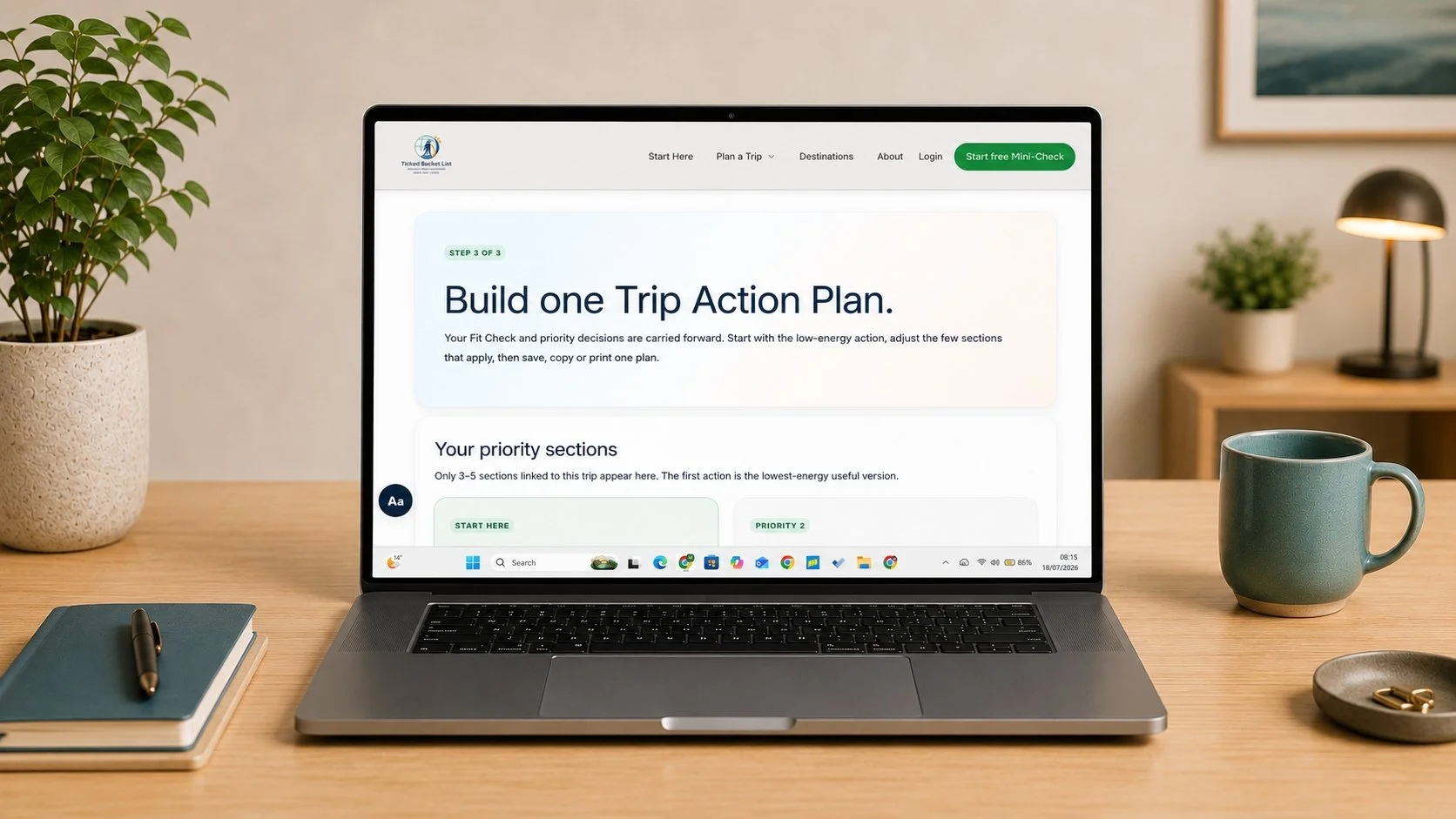
Trip Action Plan
A practical summary of the decisions you have made for this trip.
Save it on your device, copy it, print it or export a backup.
Built from the TBL Trip Fit Method
Clinician-founded, with specialist experience in chronic pain.
Look at the whole trip, not each difficult part on its own.
The method brings the flight, hotel, activities, rest and backup plans into the same picture. That can make it easier to spot when individually manageable parts of a trip become harder because they happen too close together.
See how the TBL Trip Fit Method works →How the Starter Kit works
Five steps to a plan you can use.
Start with what matters, look at the whole trip, notice what may pile up, decide what to change, then bring those decisions into one plan.
- 01
Start with what matters
Why are you making this trip, and what part of it matters most to you?
- 02
Look at the whole trip
Bring together the travel day, accommodation, activities, getting around, rest and backup options.
- 03
Notice what may pile up
See where tiring, uncertain or difficult parts of the trip happen too close together.
- 04
Decide what to change
Choose what to keep, make easier, check in advance or leave optional.
- 05
Build your plan
Bring your decisions, backup option, recovery time and next steps into one Trip Action Plan.
Sometimes it is the combination that makes a trip difficult.
An early flight, an evening event or an early journey home may each be manageable. Put them into the same short trip with little recovery time, and the trip may ask much more of you.
An important family event in another city
This example shows the method in use. It is not personal advice or a prediction of what any traveller will tolerate.
- The first plan
- Early flight, hotel transfer, sightseeing, evening event and travel home the next morning.
- What stands out
- The early start, uncertain hotel check-in, sightseeing, fixed event and early journey home leave very little time to recover.
- What needs checking
- Can the hotel offer early room access? Can the return journey be moved if necessary?
- What changes
- Keep the family event.
- Drop the sightseeing.
- Set a sensible leaving time.
- Make the following morning easier.
- Next step
- Contact the hotel before committing to the harder-to-change return booking.
Want to do this with your own trip?
Use the Starter Kit to turn the decisions into your own Trip Action Plan.

Is the Starter Kit right for this trip?
It is designed for one real trip when several parts of the plan still need to come together.
It may fit if
- You are trying to work out whether the current version of your trip is realistic for you.
- You have decisions to make about travel, accommodation, activities, rest or backup plans.
- You want a clear process to help you make those decisions yourself.
Another option may fit better if
- You only need a quick first look at what may need attention: start with the Free Mini-Check.
- Your trip is already well developed and you want a specialist to take a written second look at one important decision: see the Trip Decision Review — $395.
- You need medical advice, medical clearance, booking assistance or guaranteed accessibility: the Starter Kit does not provide these.
Two practical questions.
Could I just use AI?
AI can help with research, comparisons, questions and notes. The Starter Kit gives you a repeatable way to look at one whole trip, notice where demands combine, decide what to change and keep those decisions together in one Trip Action Plan. You can use AI alongside it.
Can I return on another device?
Your TBL account lets you reopen the Starter Kit after purchase, but trip answers do not synchronise between devices. Export a trip backup before changing browser or device, clearing browser data or starting another trip.
Planning support only.
The Starter Kit does not provide medical advice, diagnosis, treatment, prescribing, medication-change guidance, medical clearance, emergency care, legal or insurance advice, provider recommendations, accessibility guarantees or full-service travel booking.
Read the full planning boundaries →Ready to make your trip easier to plan?
See what may ask too much, decide what matters most and keep your main decisions, backup plan and next steps in one place.